Recycled Pixel Phones Become a Data Center: 2,000 Devices, 50% Less Carbon Footprint
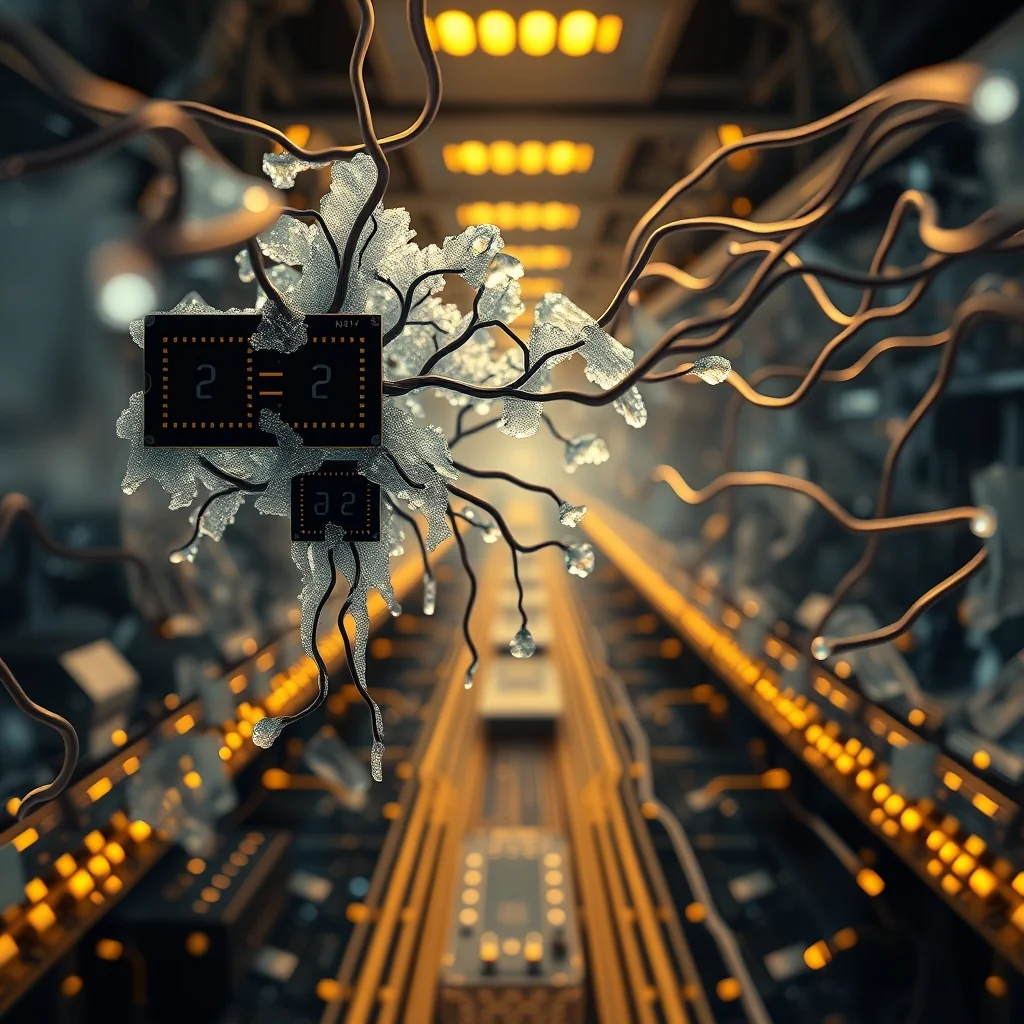
Researchers at UC San Diego, backed by Google, are building a data center from 2,000 retired Pixel smartphones. By retaining the motherboards they save around 50% of embodied carbon, and a cluster of 25 to 50 phones already handles peak workloads for 75 parallel computing courses.
This article was generated using artificial intelligence from primary sources.
Every four years, the average user replaces their smartphone. Old devices end up in a drawer, a recycling center, or — in most cases — on a shelf because they “might still come in handy.” Researchers at the University of California San Diego, with support from Google, have decided to define what that “handy” can actually mean: data center infrastructure with a dramatically smaller carbon footprint than conventional alternatives.
What Is a Phone-Based Data Center, Really?
The project does not involve stacking phones in rack drawers and plugging in chargers. The approach is technically precise. From each retired Pixel device, the motherboard — the heart of every smartphone — is removed, and all components unnecessary for server use are stripped away: the screen, battery, case, and cameras. What remains is the processor, memory, and network chip.
The Android OS is replaced with a general-purpose Linux distribution. The devices are then organized into clusters of 25 to 50 phones managed by Kubernetes — the same container orchestration system that powers data centers at Google, Amazon, and Microsoft. The result is heterogeneous hardware that behaves as a homogeneous pool of computing resources.
Why Does the Motherboard Make the Difference?
When researchers speak of 50% savings in embodied carbon, they are referring to carbon already consumed in the manufacturing process — from mining rare metals to the factory assembly line. That carbon cannot be “undone,” but the lifespan of the components it cost can be extended.
The motherboard accounts for roughly half of the total carbon cost of a smartphone. By removing the screen and battery — the components that limited the device’s lifespan and that a server does not need anyway — and retaining the motherboard, the project effectively doubles the utilization of embodied carbon in that portion of the hardware. Instead of immediately manufacturing a new server with a new carbon cost, the motherboards of old phones complete a second life cycle in computing infrastructure.
Performance: One Cluster for 75 University Courses
The benchmarks the researchers cite are not negligible. According to SPEC standards, single-core performance of a modern smartphone meets or exceeds modern server cores. A cluster of 25 to 50 phones matches the performance of one modern server.
Practical proof: a cluster of 20 phones is already successfully handling peak teaching workloads for more than 75 parallel computing courses. Job evaluation latency within the cluster is below that achieved by an AWS t3.micro instance — the low-cost cloud tier that many institutions already use for these workloads.
The planned scale of the project is 2,000 Pixel phones, with full deployment expected in autumn 2026. Current applied workloads are conservative: educational apps, Jupyter notebook hosting, and background infrastructure for systems programming courses — all categories that already exist on cloud services and migrate easily.
Broader Potential: Enterprise Phone Fleets
What UC San Diego is building for the academic community has a logical parallel in the corporate sector. Companies that refresh employee smartphone fleets every few years currently hand those devices over to recycling programs or sell them on the secondary market. Researchers note that the phone-based data center model could be applied to such enterprise fleets — opening a path for an organized second life cycle for hardware within the company’s own infrastructure.
Questions that remain open: the long-term reliability of motherboards without the original thermal protection of their cases, managing hardware diversity in heterogeneous fleets, and eventual integration with existing infrastructure monitoring tools. For now, however, the project provides a compelling proof of concept: a retired smartphone is not electronic waste — at least not immediately.
Frequently Asked Questions
- How many retired phones are needed to replace one modern server?
- Between 25 and 50 smartphones match the performance of one modern server, according to benchmarks cited by researchers at UC San Diego.
- What is physically done to the phones when converting them into a server?
- The motherboard is removed, and screens, batteries, cases, and cameras are stripped out. Android OS is replaced with a Linux distribution, and the devices are organized into Kubernetes clusters.
- When is the full implementation of this data center planned?
- Full deployment of 2,000 Pixel phones is planned for autumn 2026, and a 20-phone cluster is already running in a production environment.
📬 AI news in your inbox
A daily digest built your way — pick topics, sources and cadence. One-click unsubscribe.
Related news
AMD: hipVS — GPU vector search for Instinct, cuVS-compatible, with agentic RAG demo
NVIDIA: performance per watt as the key metric — Blackwell GB300 up to 25× more efficient than Hopper
AMD: GEAK Agent Automatically Optimized DeepSeek-V4 MLA Kernel on MI355 with Up to 9× Speedup