Sakana AI: 'Smart Cellular Bricks' Bring Collective Intelligence to the Physical World
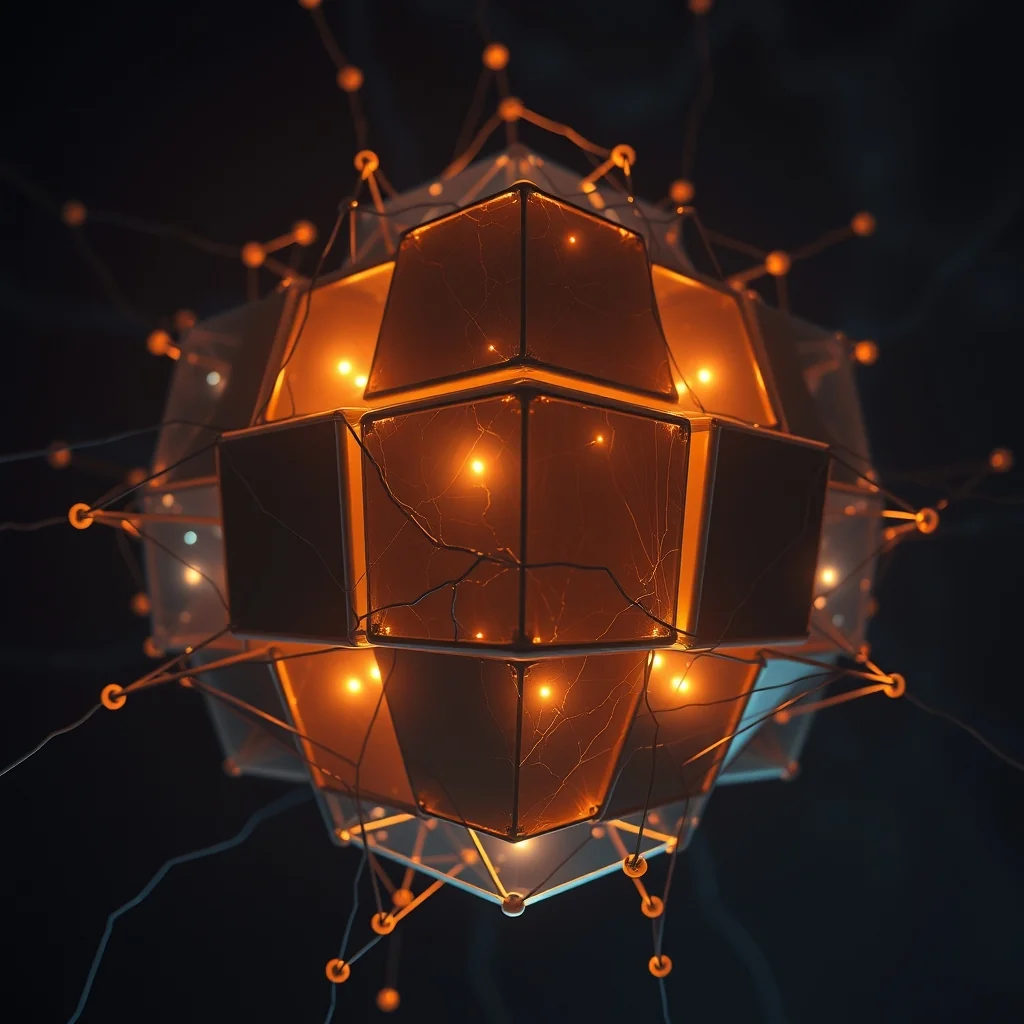
Sakana AI has developed modular physical bricks, each running an identical local neural network with no central coordination. Collectively they can recognize the shape of an entire assembly and detect structural damage, extending Sakana's earlier software work on collective intelligence into physical hardware.
This article was generated using artificial intelligence from primary sources.
Research laboratory Sakana AI has published a paper on “smart cellular bricks” — modular three-dimensional physical units that collectively make decisions without any central supervisory system. The project extends Sakana’s earlier research work on collective intelligence in software into tangible physical hardware.
What Is Collective Intelligence and How Does It Work Without a Center?
Collective intelligence refers to global behavior that emerges exclusively from simple local interactions without central management — similar to the behavior of ant colonies or neurons in the brain. In Sakana’s system each cubic brick runs an identical local neural network and communicates only with its immediate neighbors: there is no shared memory, no coordinator, no hierarchy. Despite this, a collection of bricks can collectively recognize the overall shape of the assembly they form and detect structural damage at any position within that assembly.
How Different Is This From Existing Approaches?
Most robotic and sensor systems rely on a central unit that collects data from all modules and makes decisions. Sakana AI’s approach is the opposite: each brick is autonomous and replaceable, and the system as a whole does not depend on any single unit. This means that damage to or loss of one brick does not paralyze the rest of the assembly — the system adapts distributively. Compared to centralized architectures, this approach is more robust to partial failures and scales more easily by adding new units without reprogramming.
Where Could This Be Useful?
Potential applications span three areas. In robotics, modular bodies can reconfigure without reprogramming a central controller. In smart structures, bricks embedded in walls or load-bearing elements could autonomously signal structural damage without the need for an external sensor system. In distributed sensor networks for industrial or security applications, a system without a central point of failure is inherently more resilient than traditional architectures. Sakana AI emphasizes that the research is at an early stage, but it represents a concrete step toward physical systems that think collectively.
Frequently Asked Questions
- How can 'smart bricks' recognize anything if each one only knows local information?
- Each brick exchanges information only with neighboring bricks, but global behavior emerges from these local signals — like neurons in the brain that individually process local signals but together form perception. This is the core principle of collective intelligence.
- What are the practical applications of this system?
- Potential applications include robotics with modular bodies that can reconfigure, smart building structures that autonomously detect damage, and distributed sensor networks in industrial and security systems.
Sources
📬 AI news in your inbox
A daily digest built your way — pick topics, sources and cadence. One-click unsubscribe.